
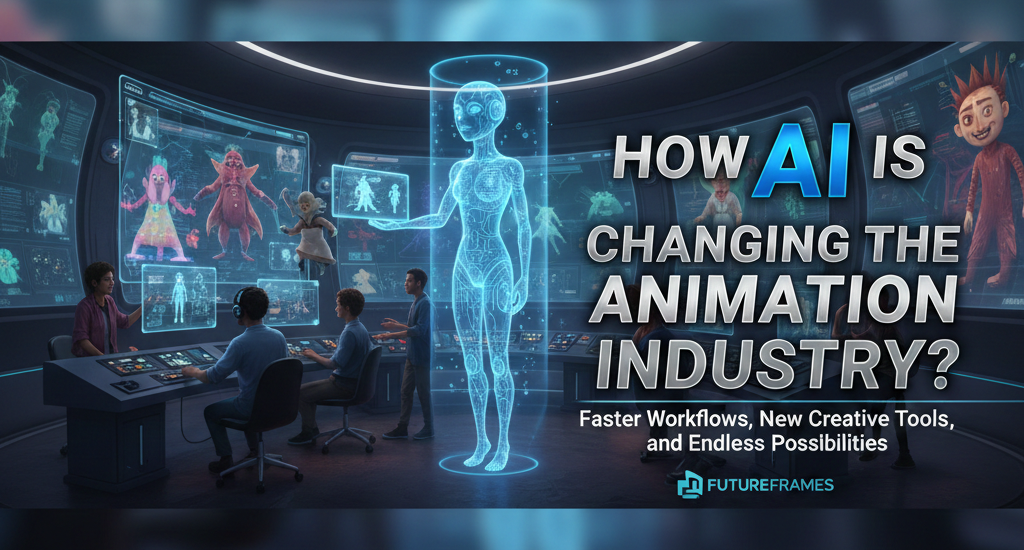
How AI Is Changing the Animation Industry
Artificial Intelligence (AI) is transforming the animation industry faster than any previous technology. From automating repetitive tasks to enhancing creative workflows, AI is reshaping how animations are created, optimized, and delivered across films, games, OTT platforms, advertising, and digital marketing.
This guide explains how AI is changing animation, its tools, benefits, limitations, and career opportunities for beginners.
What Is AI in Animation?
AI in animation refers to the use of machine learning and automation tools to assist in creating, editing, and enhancing animated content.
AI helps automate tasks like character rigging, lip-syncing, motion capture cleanup, rendering optimization, and style generation.
It improves speed, accuracy, and scalability without fully replacing human creativity.
How Is AI Used in the Animation Industry Today?
AI is integrated across the animation production pipeline.
Key applications include:
- Automated character rigging
- AI-assisted motion capture
- Smart in-betweening for 2D animation
- AI-based lip-sync generation
- Faster rendering and scene optimization
- Style transfer and concept generation
How AI Is Changing Traditional Animation Workflows
AI has reduced production time while increasing output quality.
Major workflow changes:
- Pre-production – AI generates concept art and storyboards
- Production – AI automates animation frames and motion cleanup
- Post-production – AI enhances lighting, rendering, and compositing
This allows studios to focus more on storytelling and creativity.
AI vs Traditional Animation: Key Differences
| Aspect | Traditional Animation | AI-Powered Animation |
|---|---|---|
| Production Speed | Time-consuming | Faster & automated |
| Cost | High manpower cost | Reduced production cost |
| Skill Dependency | Manual expertise | Tool + creative skills |
| Scalability | Limited | Highly scalable |
| Creativity | Fully human-driven | Human + AI collaboration |
Can AI Replace Animators?
No, AI cannot replace animators.
AI handles repetitive and technical tasks, but creativity, storytelling, emotional expression, and artistic direction still require human expertise.
AI acts as a creative assistant, not a replacement.
Benefits of AI in the Animation Industry
Key advantages:
- Faster project delivery
- Lower production costs
- Improved animation quality
- Real-time previews and edits
- Better consistency in characters
- Scalable content for digital platforms
These benefits are especially valuable in digital marketing, gaming, and OTT production.
Limitations of AI in Animation
Despite its power, AI has clear limitations.
Common challenges:
- Limited creative originality
- Dependency on training data
- Ethical and copyright concerns
- Requires skilled human supervision
- High initial software costs
Human judgment remains critical.
AI Tools Used in Animation
Popular AI-powered animation tools include:
- Adobe Sensei
- Runway ML
- Autodesk AI tools
- DeepMotion
- Cascadeur
- Unreal Engine AI systems
- Blender AI add-ons
These tools are increasingly taught in modern animation courses.
Career Opportunities After Learning AI in Animation
AI has expanded career paths rather than reduced them.
In-demand roles for freshers:
- AI-Assisted Animator
- Motion Graphics Designer
- VFX Artist
- Game Artist
- Technical Animator
- Digital Content Creator
- Creative AI Specialist
These roles are highly relevant to digital marketing and media careers in 2026.
Skills Required to Work with AI in Animation
Beginners should focus on a hybrid skill set.
Essential skills:
- Animation fundamentals
- 2D/3D animation software
- AI-powered creative tools
- Visual storytelling
- Basic scripting or tool logic
- Portfolio development
Creativity + technology is the winning combination.
Is AI Animation Useful for Digital Marketing?
Yes. AI-driven animation is widely used in digital marketing.
Use cases include:
- Animated ads
- Social media videos
- Brand explainer videos
- Personalized video content
- Short-form content for reels & ads
AI enables faster, data-driven content creation at scale.
Should Beginners Learn AI-Based Animation in 2026?
Yes. Learning AI-enhanced animation gives beginners a competitive edge.
Why it matters:
- Industry demand is increasing
- AI skills improve employability
- Future-ready career path
- Global freelance opportunities
- Integration with AR, VR, and Metaverse
FAQs: AI and the Animation Industry
1. How is AI changing the animation industry?
AI automates repetitive tasks, speeds up production, improves quality, and allows animators to focus more on creativity and storytelling.
2. Can beginners learn AI animation easily?
Yes. Beginners can learn AI-assisted animation tools alongside traditional animation fundamentals through structured courses.
3. Is AI animation a good career option?
Yes. AI animation offers strong career growth in films, gaming, OTT platforms, advertising, and digital marketing industries.
4. Does AI reduce animation jobs?
No. AI creates new roles and increases demand for skilled animators who can work with advanced tools.
5. What software is used for AI animation?
Common tools include Adobe Sensei, Runway ML, Unreal Engine, Blender AI add-ons, and Autodesk AI tools.
6. Is AI animation used in digital marketing?
Yes. AI animation is widely used for ads, explainer videos, social media campaigns, and branded content.
Final Thoughts
AI is not replacing animation—it is evolving it. The future belongs to animators who combine creativity with AI-powered tools. For beginners and students, learning AI-based animation in 2026 opens doors to high-demand roles across entertainment, gaming, and digital marketing.
